

Price is one of the first factors buyers consider when purchasing a welding robot, yet costs can vary significantly. These differences stem from factors such as product type, system configuration, level of intelligence, and service offerings.
This article breaks down welding robot price ranges and selection criteria across different categories, helping businesses understand how much to invest and where their money goes.
Conclusion: Welding robots have no fixed standard price, with costs ranging from tens of thousands to several million. The final price depends on factors such as payload capacity, welding process (arc welding, spot welding, or laser welding), vision system integration, and additional services including accessories, installation and commissioning, and technical training. The following sections break down pricing across three main product categories.
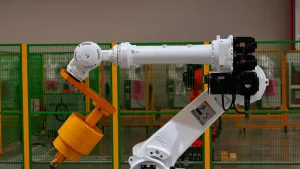
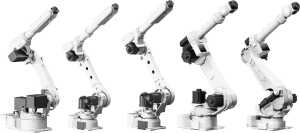
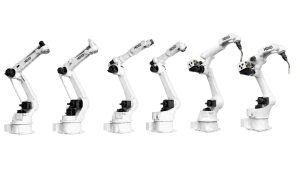
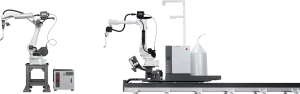
Robot Only: Arm; welding power source, torch, and fixtures sold separately
1、Welding Robot Price Ranges: How Much Do Robot Arms, Welding Workstations, and Intelligent Models Cost?
Welding robots on the market generally fall into three categories, each with different system configurations and levels of intelligence. These differences are the primary reason for the wide range of prices.
1.1 Welding Robot Arm
Definition: Typically refers to the robotic arm, which is primarily responsible for motion.
Versatility: Beyond welding, it can perform loading and unloading, material handling, and palletizing by simply changing the end effector, enabling multiple applications with one robot.
Price Positioning: The most basic configuration among the three types, serving as the core unit of a welding system.
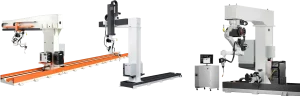
1.2 Robotic Welding Workstation
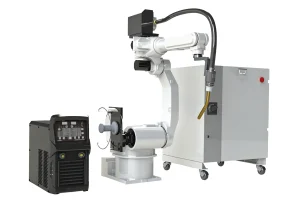
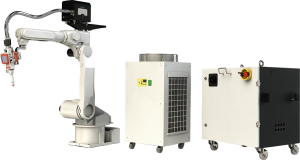
Configuration: Built around a robotic arm, with supporting components such as a control cabinet, welding torch, welding power source, and workpiece positioning fixtures.
Capabilities: Supports various welding processes, including spot welding, arc welding, and laser welding.
Price Positioning: A complete system package that includes additional components such as welding power sources and fixtures. It offers a higher level of readiness for immediate deployment compared to purchasing a robot arm alone.
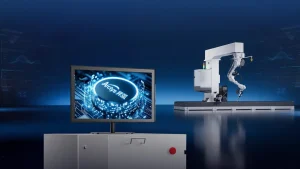
1.3 Intelligent Welding Robot
Positioning: A mainstream solution in modern welding automation.
Core Capabilities: Integrates vision systems and intelligent welding software to enable environmental perception and adaptive parameter adjustment.
Applications: Meets manufacturers’ stringent requirements for welding precision, production efficiency, and digitalization.
Price Positioning: The highest level of intelligence among the three categories, supported by integrated vision systems and intelligent software.
The configuration differences across these three categories directly translate into different price ranges. When selecting a solution, businesses should first assess whether their workpieces require vision-based perception and adaptive parameter adjustment, then determine the appropriate level of investment.
2、3Srobotics Welding Robots: Three Generations for Different Budget Ranges
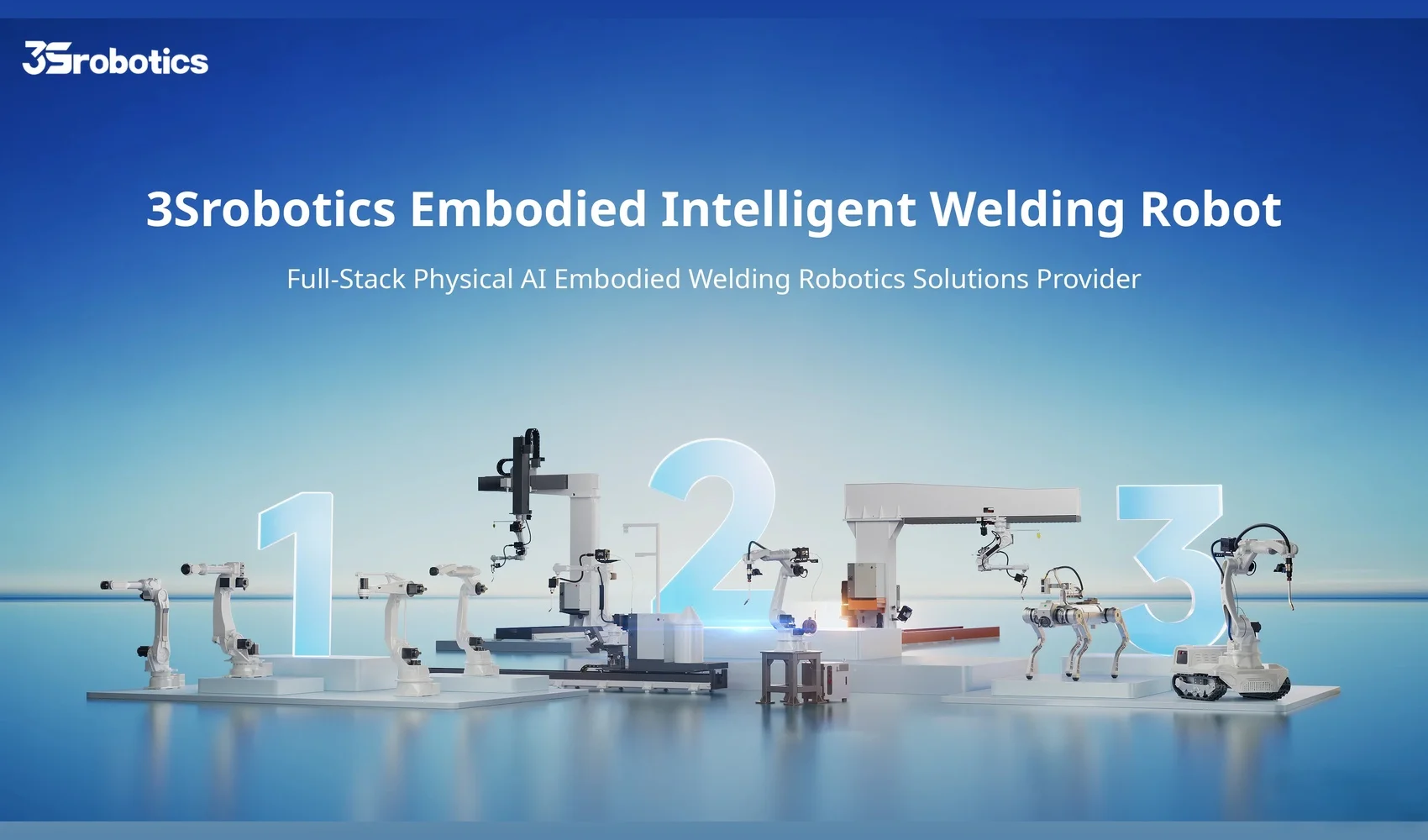
Taking 3Srobotics as an example, its product portfolio has evolved through three generations, covering the three major types of welding robots commonly available on the market.
With payload capacities ranging from 8 kg to 220 kg, 3Srobotics offers three generations of solutions: standard welding packages, embodied intelligent welding robots, and mobile robotic systems, each catering to different budget ranges.
| Generation | Product Type | Key Features |
| First Generation | Full Range of Robot Arms and Standard Welding Packages | Payload capacities from 8 kg to 220 kg; standard welding packages for arc, spot, and laser welding |
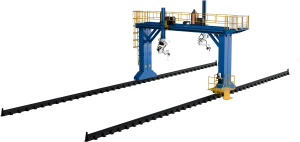
| Second Generation | Embodied Intelligent Welding Robots | Multiple series, including F Series, C, G, and X; flexible welding configurations with gantry, cantilever, and floor-track systems. |
| Third
Generation |
Mobile Embodied Intelligent Robots | Primarily featuring tracked mobile robots and quadruped robots; autonomous navigation to work areas and automatic planning of travel paths and welding trajectories for greater operational flexibility. |
Across three generations, 3Srobotics offers solutions for diverse industrial applications and production needs. The first-generation H Series robot arms cover a full payload range of 8–220 kg, serving as the foundation for standard welding packages.
Customer Case: According to a steel structure manufacturer, after adopting 3Srobotics intelligent welding solutions, one operator can oversee four machines simultaneously, achieving a stable daily output of 600 meters. 3Srobotics products have been deployed by nearly 200 enterprise customers across industries such as railways, power grids, and steel structures.
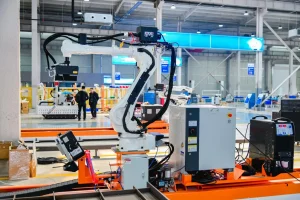
Complete Welding Workstation: Robot, power source, control cabinet & fixtures
3、What Other Costs Should You Consider When Purchasing a Welding Robot?
Beyond the equipment price, businesses should also consider the following services:
Accessories and Configuration: Selection of supporting components such as welding torches, welding power sources, and fixtures.
Installation and Commissioning: On-site deployment and system integration.
Technical Training: Training for equipment operators and maintenance personnel.
Rather than focusing solely on the equipment price, businesses should conduct on-site assessments based on their actual workpieces and production requirements. Equipment costs represent only part of the total investment, while supporting services and ongoing maintenance also affect the overall cost of ownership.
4、Frequently Asked Questions
Q1: How Much Does a Welding Robot Typically Cost?
Welding robots have no fixed standard price, with costs ranging from tens of thousands to several million. Pricing mainly depends on the product type (robot arms, robotic welding workstations, or intelligent welding robots), system configuration, level of intelligence, and accessories and service offerings. Businesses should evaluate their specific workpieces and production requirements to determine the right solution.
Q2: What Are the Different Types of Welding Robots, and Why Do Their Prices Vary So Much?
Welding robots on the market generally fall into three categories:
- Robot Arms: Robotic manipulators that can perform loading and unloading, material handling, and palletizing by changing end effectors.
- Robotic Welding Workstations: Integrated systems consisting of a robotic arm, control cabinet, welding torch, welding power source, and fixtures. They support spot welding, arc welding, and laser welding.
- Intelligent Welding Robots: Equipped with vision systems and intelligent welding software to enable environmental perception and adaptive parameter adjustment.
Differences in system configuration and levels of intelligence account for the significant price variations among these three categories.
Q3: What Is the Difference Between Intelligent Welding Robots and Conventional Welding Robots?
Intelligent welding robots integrate vision systems and intelligent welding software to enable environmental perception and adaptive parameter adjustment, meeting manufacturers’ higher demands for welding precision, production efficiency, and digitalization.
Conventional robot arms primarily handle motion, while robotic welding workstations combine a robotic arm with supporting equipment such as welding power sources, welding torches, and fixtures to perform welding operations.
Q4: What Types of Welding Robots Does 3Srobotics Offer?
3Srobotics offers three types of welding robots: robot arms, robotic welding workstations, and intelligent welding robots, developed across three generations.
The first generation includes a full range of robot arms with payload capacities from 8 kg to 220 kg, along with standard welding packages for arc, spot, and laser welding.
The second generation features embodied intelligent welding robots across multiple series, including F, C, G, and X, with flexible configurations such as gantry, cantilever, and floor-track systems.
The third generation advances to mobile embodied intelligent robots, primarily featuring tracked mobile robots and quadruped robots. These systems support autonomous navigation and automatic planning of travel paths and welding trajectories.
Q5: How Much Does a Robotic Arc Welding Workstation Typically Cost?
The price of a robotic arc welding workstation depends on several factors, including robot payload capacity, the brand and power rating of the welding power source, welding torch configuration, and the complexity of workpiece positioning fixtures. As a complete system package, it generally costs more than purchasing a robot arm alone.
For an accurate quotation, businesses are advised to arrange an on-site assessment based on workpiece dimensions, weld requirements, and production cycle time.
Q6: What Additional Costs Should Be Considered When Purchasing a Welding Robot?
Beyond the equipment price, businesses should also consider additional costs for accessories and configuration, installation and commissioning, and technical training. Rather than focusing solely on the quoted price, companies should conduct on-site assessments based on their actual workpieces and production requirements, clearly define their equipment and service needs, and then make an informed purchasing decision.
5、Selection Checklist: Robot Arm, Welding Workstation, or Intelligent Welding Robot?
Use the following five questions to quickly identify your requirements before purchasing:
Are the workpieces standardized with fixed weld paths?
Yes → A robot arm or standard welding package may be sufficient.
No → Consider an intelligent model equipped with a vision system.
Do you frequently switch between different workpiece types?
Yes → Prioritize embodied intelligent models that support flexible welding and multiple operating configurations.
Does your workshop require mobile operations or movement between workstations?
Yes → Consider mobile embodied intelligent robots, such as tracked robots and quadruped robots.
Do you have specific requirements for welding precision and adaptive parameter adjustment?
Yes → Choose a solution equipped with a vision system and intelligent welding software.
Does your budget include installation, commissioning, and personnel training?
Include these services in your total investment assessment when requesting a quotation.
For tailored welding robot recommendations and quotation references based on your workpiece types and production capacity requirements, contact the 3Srobotics team to arrange an on-site assessment.
6、Summary
Welding robot prices vary widely, ranging from tens of thousands to several million, depending on product type, system configuration, level of intelligence, and service offerings. To make the right choice, businesses should first define their equipment and service requirements, then conduct an on-site assessment based on their workpieces and production needs.