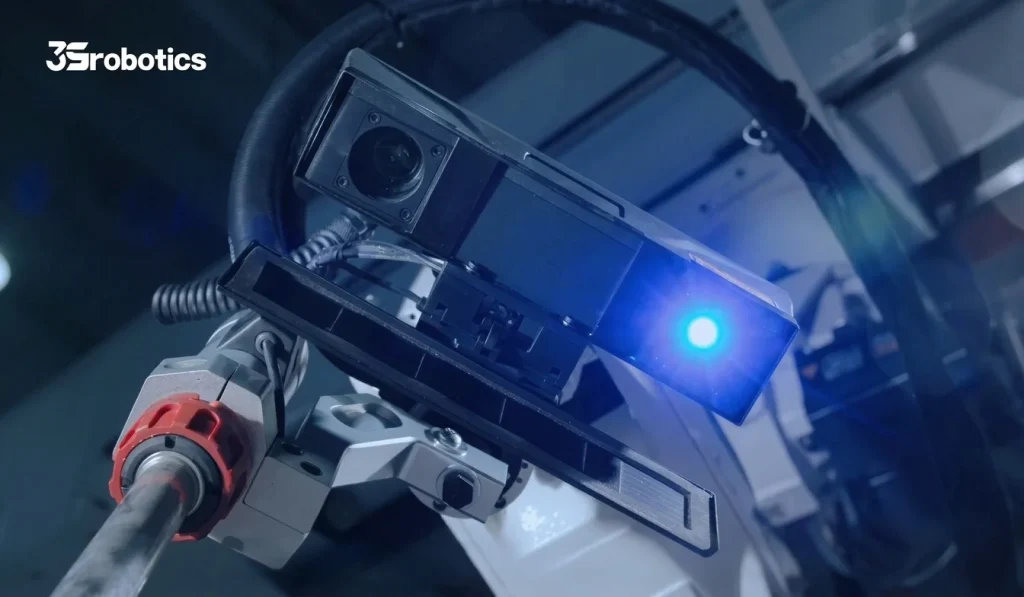
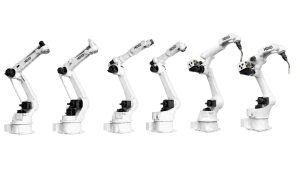
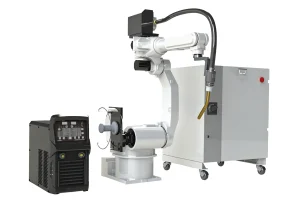
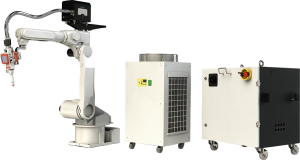
Welding is the most fundamental yet most critical process language in heavy industry. Weld beads join steel plates and profiles into solid structural components that carry the safety and quality of infrastructure projects, heavy-duty equipment and transport facilities. As a core process running through industrial production, the iterative upgrading of welding technology has always set the pace for the entire high-end manufacturing industry. As digital technology is deployed on the shop floor, industrial welding robots are entering workshops step by step, shifting welding from a reliance on manual skill toward a digitalized process that meets the fine manufacturing requirements of every industry.
This article reviews typical workpieces and welding conditions across five heavy industry sectors, and outlines the application scenarios and configuration priorities for industrial welding robots.
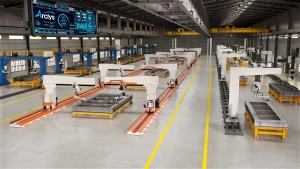
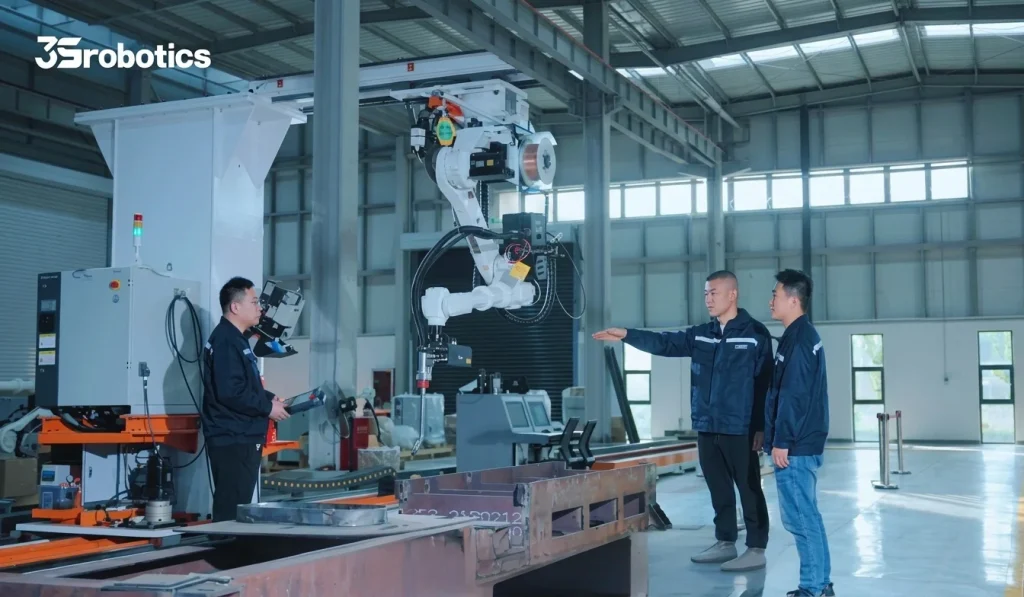
3Srobotics intelligent manufacturing workshop
1. Key Takeaways: Five Application Scenarios and Configuration Priorities
| Application field | Typical workpieces | Welding characteristics | Configuration priorities |
| Steel structures | Industrial plant frames, general-purpose steel components | Wide variety of part types, strong demand for batch production | Stable process package, suited to plate joining |
| Shipbuilding | Sub-assemblies, block sections | Large workpieces, long weld spans, complex workspaces | Multi-axis extension with coordinated ground rail and cantilever external axes |
| Bridges | Non-standard custom components | Varying dimensions and shapes, frequent changeovers | Autonomous adaptation to weld variation, no repeated teaching |
| Construction machinery | Thick plates, profiled structures, intersecting welds | Insufficient penetration, uneven weld beads, distortion and cracking | Automatic process matching, lower deformation risk |
| Power equipment | Transmission towers, power equipment frames | Long-term outdoor exposure, strict process standards | Consistent quality plus a standardized inspection system |
2. Steel Structures: Wide Variety of Part Types, Batch Production
As a core pillar industry supporting infrastructure construction, steel structures are one of the broadest application areas for industrial welding robots. From industrial plant frames to general-purpose steel components, the range of workpiece types is wide and demand for batch production is strong.
Industrial welding robots can handle the joining of various plate types and perform standardized welding over long working cycles. Take the welding robots from 3Srobotics as an example: equipped with a stable process package, they provide process support for large-scale steel structure production (specific results are subject to on-site assessment).
3. Shipbuilding: Large Workpieces, Long Welds, Complex Workspaces
Shipbuilding is a specialized segment of high-end heavy industry, with large components, long weld spans and complex working spaces.
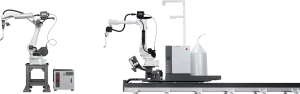
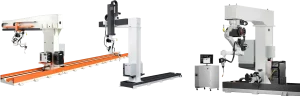
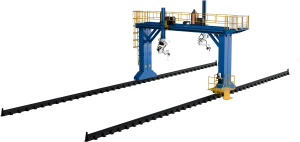
For such conditions, 3Srobotics offers a multi-axis extension solution. With coordinated external axes such as ground rails and cantilevers, it covers a large working envelope and can weld workpieces such as ship sub-assemblies and block sections, providing a solution to the challenge of welding large workpieces.
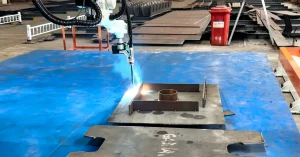
3Srobotics embodied-intelligence industrial welding robot in a ship block assembly operation
4. Bridges: Non-Standard Customization, Frequent Changeovers
Bridge manufacturing is dominated by non-standard customized production. Component dimensions and shapes vary with the span or terrain of each bridge project, and changeovers are frequent, which places high demands on the adaptability of welding equipment.
Industrial welding robots can autonomously adapt to weld variations on non-standard components without repeated teaching, fitting a customized production model with many part types and small batch sizes. The 3Srobotics eight-axis cantilever embodied-intelligence welding robot provides a suitable solution for bridge welding conditions.
5. Construction Machinery: Thick Plates, Profiled Structures, Many Intersecting Welds
Workpieces in construction machinery are mostly thick plates with profiled structures and numerous intersecting welds, and the sector commonly faces welding challenges such as insufficient penetration, uneven weld beads, distortion and cracking.
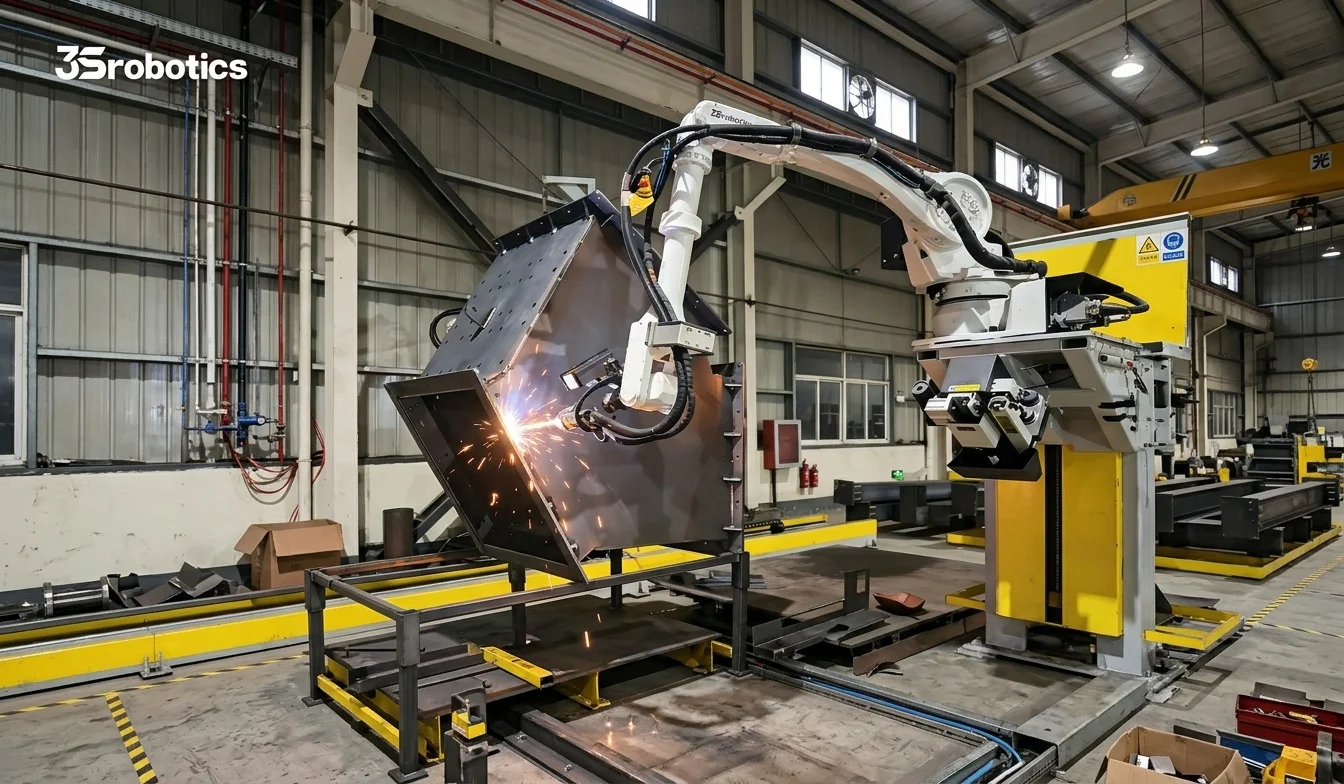
With its stable process output, the industrial welding robot helps avoid manual operation errors and ensures weld consistency. The seven-axis cantilever embodied-intelligence industrial welding robot from 3Srobotics automatically matches welding processes, reducing the risk of welding deformation and supporting the intelligent upgrade of the construction machinery sector.
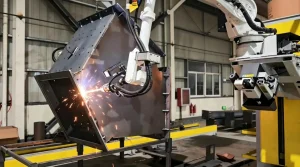
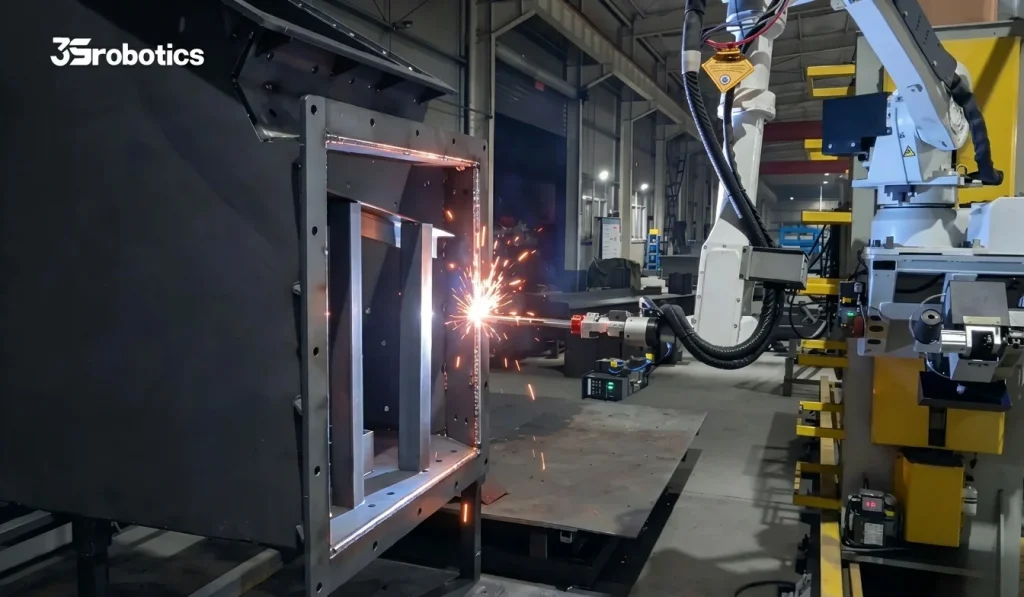
3Srobotics embodied-intelligence industrial welding robot in a construction machinery operation
6. Power Equipment: Strict Process Standards, High Traceability Requirements
Power equipment manufacturing follows strict process standards to ensure the long-term, stable operation of public infrastructure. Products such as transmission towers and power equipment frames are exposed outdoors for long periods and must withstand temperature swings, wind, rain and other factors.
Industrial welding robots deliver consistent weld quality while helping build a standardized inspection system, which improves the durability and safety of power equipment and provides process assurance for the long-term operation and maintenance of power infrastructure. 3Srobotics welding robots can interface with the quality traceability management requirements of power equipment.
7. Quick Reference for Scenario Configuration
| Application field | Pain points of manual welding | Industrial welding robot solution |
| Steel structures | Large batches, mixed part types, consistency hard to ensure | Stable process package, standardized welding over long working cycles |
| Shipbuilding | Large components, long weld spans, complex workspaces | Coordinated ground rail and cantilever external axes covering a large working envelope |
| Bridges | Non-standard customization, frequent changeovers | Autonomous adaptation to weld variation, no repeated teaching |
| Construction machinery | Insufficient penetration on thick plates, uneven beads, distortion and cracking | Automatic process matching, lower deformation risk |
| Power equipment | High outdoor durability requirements, strict quality traceability | Consistent quality plus a standardized inspection system |
8. Frequently Asked Questions (FAQ)
Q1: What are the application scenarios for industrial welding robots?
Five major fields are mainly covered: steel structures (plant frames, steel components), shipbuilding (sub-assemblies, block sections), bridges (non-standard custom components), construction machinery (thick plates, profiled structures) and power equipment (transmission towers, equipment frames). 3Srobotics provides corresponding configuration solutions for each field.
Q2: Why are 3Srobotics industrial welding robots well suited to steel structures?
Steel structure workpieces cover a wide range of types and are in strong demand for batch production. 3Srobotics welding robots are equipped with a stable process package and can handle the joining of various plate types, achieving standardized welding over long working cycles and providing process support for large-scale production (specific results are subject to on-site assessment).
Q3: How do 3Srobotics robots solve the challenges of large workpieces and long welds in shipbuilding?
Ship components are large, weld spans are long and working spaces are complex. 3Srobotics offers a multi-axis extension solution that relies on coordinated external axes such as ground rails and cantilevers to cover a large working envelope, completing the welding of workpieces such as ship sub-assemblies and block sections.
Q4: How do 3Srobotics robots handle frequent changeovers of non-standard bridge components?
Bridge components vary in size and shape, and changeovers are frequent. 3Srobotics industrial welding robots autonomously adapt to weld variations on non-standard components without repeated teaching, fitting a customized production model with many part types and small batch sizes; the eight-axis cantilever embodied-intelligence welding robot is designed for exactly such conditions.
Q5: How do 3Srobotics robots address insufficient penetration, distortion and cracking in thick-plate welding for construction machinery?
Construction machinery workpieces are mostly thick plates with profiled structures and intersecting welds. The 3Srobotics seven-axis cantilever embodied-intelligence industrial welding robot automatically matches welding processes and, with its stable process output, helps avoid manual operation errors and reduce the risk of welding deformation.
Q6: Power equipment has strict traceability requirements. Can 3Srobotics robots meet them?
Power equipment follows strict process standards, and transmission towers and equipment frames are exposed outdoors for long periods. While delivering consistent weld quality, 3Srobotics welding robots can interface with a standardized inspection system and quality traceability management requirements, improving the durability and safety of power equipment.
Q7: Where can I find product information on 3Srobotics industrial welding robots?
Product documentation on industrial welding robots and embodied-intelligence industrial welding robots is available on the 3Srobotics official website; more information can be found at 3srobotics.com.
9. Conclusion
From urban infrastructure to heavy equipment manufacturing, from onshore projects to offshore ships, superior welding quality has always been the foundation of industrial manufacturing. As an important vehicle for the intelligent manufacturing upgrade, industrial welding robots continue to reduce costs and improve quality for core industries such as steel structures, shipbuilding, bridges, construction machinery and power equipment, supporting the intelligent transformation and upgrading of traditional heavy industry.
When planning welding automation, a company can match its main workpiece types against the five fields, and then determine the robot form factor together with the external axis and process package configuration based on four conditions: workpiece size, weld span, whether non-standard customization is required, and quality traceability requirements.