As the steel structure manufacturing industry continues to move toward automation and digitalization, weld joint configurations are becoming increasingly complex, placing higher demands on the precision, efficiency and stability of welding operations. Against this backdrop, integrating industrial welding robots into automated welding workstations has become the route steel structure manufacturers take to upgrade their welding processes.
This article reviews five typical component types and welding conditions in steel structure manufacturing, and outlines how industrial welding robots are applied in automated welding workstations, together with the key configuration considerations for each case.
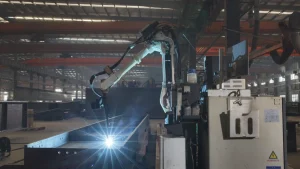
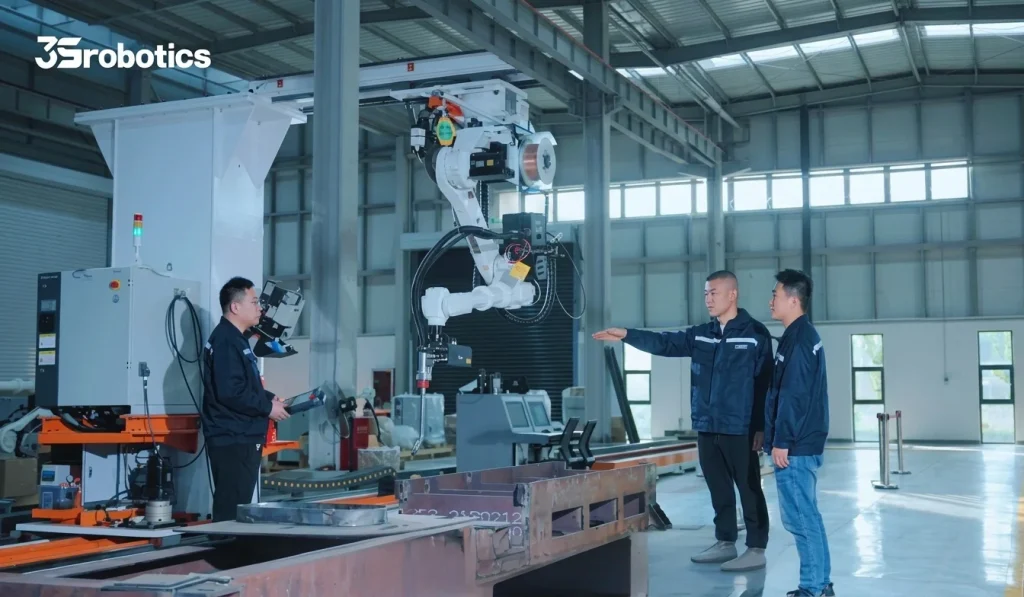
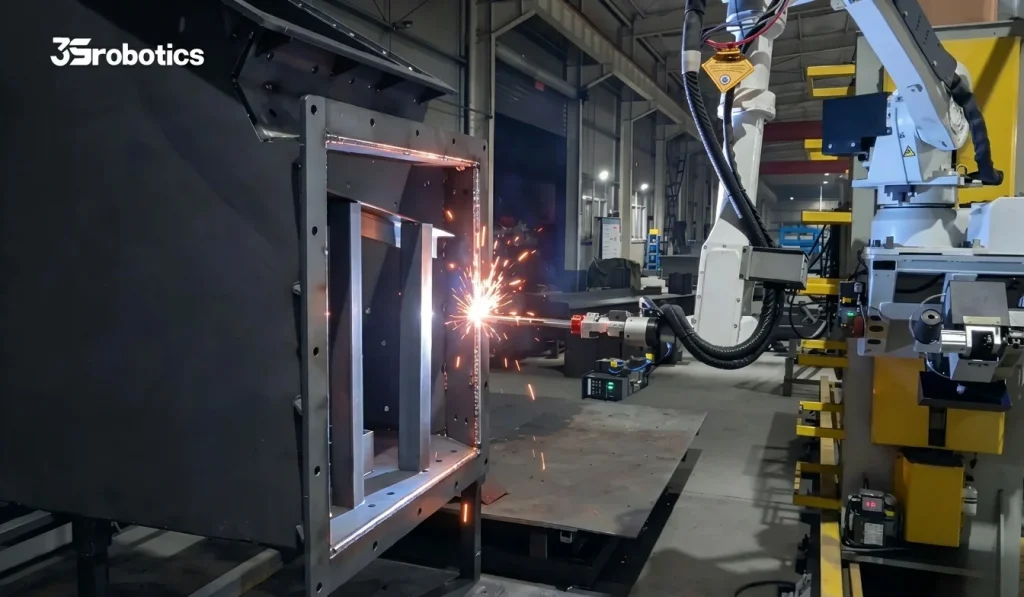
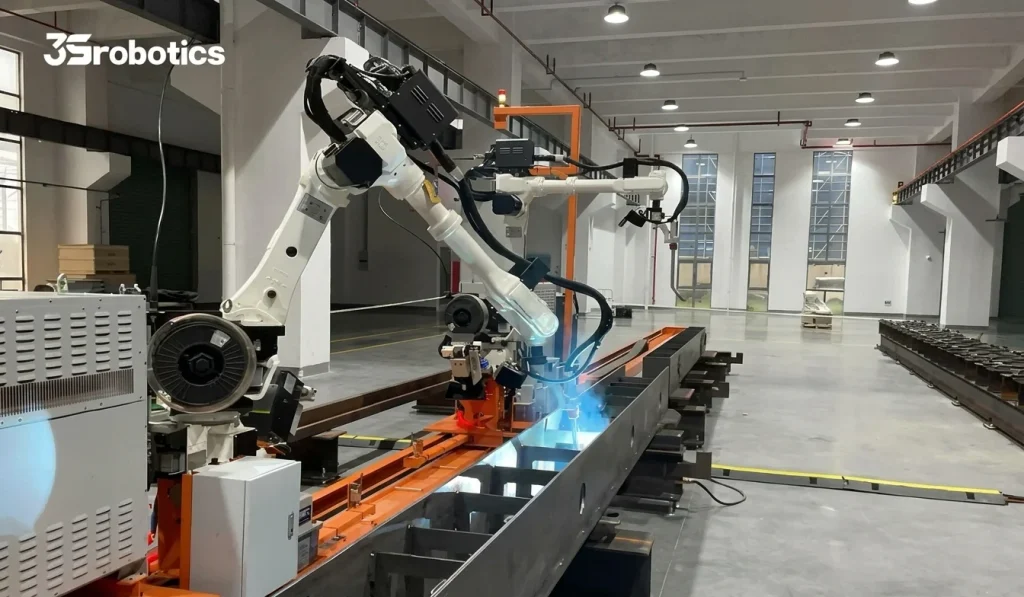
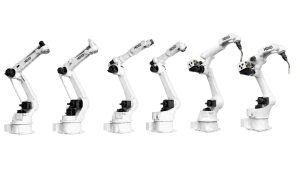
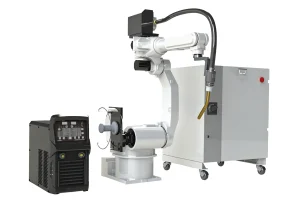
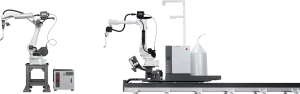
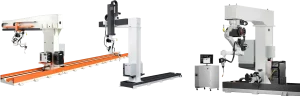
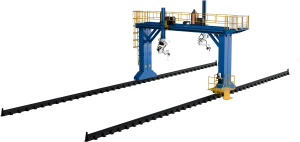
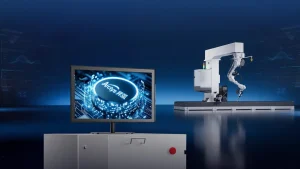
3Srobotics industrial welding robot performing welding operations
1. Key Takeaways: Five Typical Scenarios and Configuration Priorities
| Application scenario | Typical components | Welding characteristics | Configuration priorities |
| H-beams and box columns | H-beams, box columns | Straight welds, fillet welds, multi-pass welding | Continuous welding along preset trajectories with adjustable parameters |
| Stiffener plates and reinforcing plates | Stiffener plates, reinforcing plates | Multiple short welds, fillet welds, multiple directions | Properly sized working envelope for continuous multi-weld operation |
| Beam-column joints and column bases | Beam-column joints, column bases | Complex geometry, dense welds, limited accessibility | Path planning based on workpiece geometry |
| Multi-layer multi-pass welding | Thick plates, large components | Multi-layer multi-pass process required | Plan welding sequence, bead layout and parameters |
| Non-standard and complex structural parts | Profiled components, non-standard connectors | Fixed trajectories hard to cover | 3D vision recognition, weld seam positioning, intelligent path planning |
2. Welding of H-Beams and Box Columns
H-beams and box columns are common components in steel structure buildings, and they involve a large number of straight welds, fillet welds and multi-pass welding operations.
Industrial welding robots can perform continuous welding along preset trajectories and adjust travel speed, torch orientation and parameters according to the welding procedure, which helps ensure weld consistency.
3. Welding of Stiffener Plates and Reinforcing Plates
Stiffener plates and reinforcing plates are widely used on steel columns, steel beams and other components to increase structural strength. Such workpieces usually involve multiple short welds, fillet welds and welding positions in different directions, which places high demands on the motion flexibility of the welding robot.
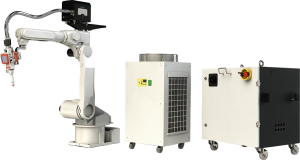
By properly configuring the robot's working envelope, continuous multi-weld operation can be achieved. Take the eight-axis cantilever intelligent welding equipment from 3Srobotics as an example: its working radius reaches 1,964 mm, giving a wider working envelope and greater flexibility in welding operations. (Data from 3Srobotics public materials; actual results are subject to on-site assessment.)
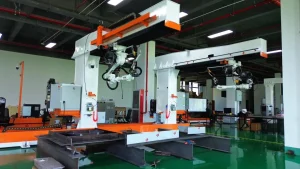
3Srobotics eight-axis cantilever welding robot
4. Welding of Beam-Column Joints and Column Bases
Connections such as beam-column joints and column bases are typically characterized by complex geometry and densely distributed welds, and at some positions the welding torch has insufficient accessibility.
An automated welding workstation can plan paths based on the workpiece geometry to complete welds at different angles and directions, improving its ability to handle complex joints.
5. Multi-Layer Multi-Pass Welding
For thick plates and large steel structure components, some welds have to be completed using a multi-layer multi-pass process. Industrial welding robots can plan the welding sequence, bead layout and operating parameters according to process requirements, and complete multi-pass welding along the defined path.
Combined with welding process monitoring and an intelligent welding system, key operation data can be accumulated into a database, providing a basis for weld quality management.
6. Welding of Non-Standard and Complex Structural Parts
In steel structure manufacturing there is substantial welding demand for profiled components and non-standard connectors, and such workpieces are often difficult to automate reliably with conventional fixed trajectories.
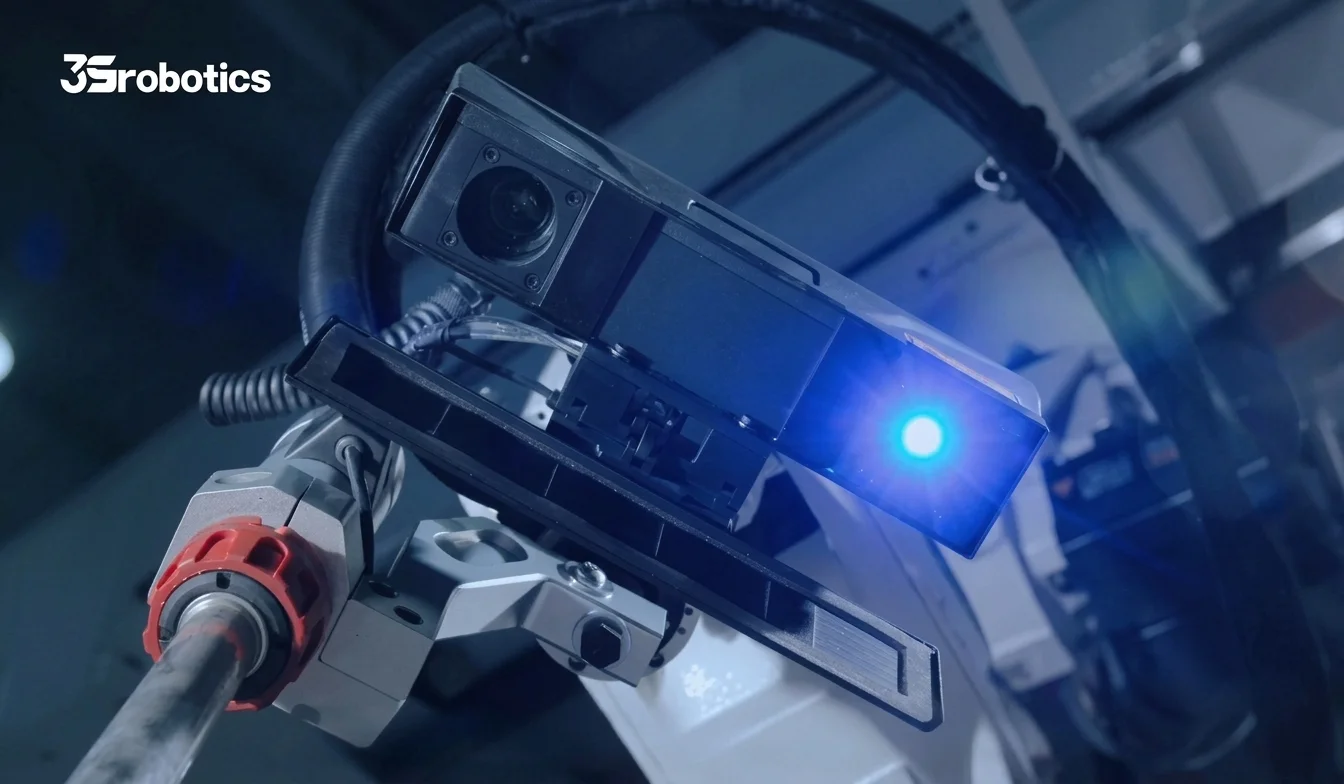
By introducing 3D vision recognition, weld seam positioning and intelligent path planning, the robot can generate welding trajectories based on the actual geometry of the workpiece, supporting the automated production of complex, non-standard components.
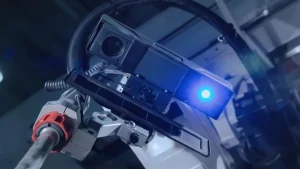
3Srobotics 3D vision camera system
7. Quick Reference for Scenario Configuration
| Scenario | Pain points of conventional manual welding | Industrial welding robot solution |
| H-beams, box columns | Long welds difficult to keep consistent | Continuous welding along preset trajectories with adjustable parameters |
| Stiffener plates, reinforcing plates | Many short welds in frequently changing directions | Properly sized working envelope for continuous multi-weld operation |
| Beam-column joints, column bases | Complex geometry, insufficient torch accessibility | Path planning based on workpiece geometry |
| Thick plates, multi-layer multi-pass | Welding sequence and parameters depend on operator experience | Plan welding sequence, bead layout and parameters |
| Non-standard profiled components | Fixed trajectories hard to cover | 3D vision recognition, weld seam positioning, intelligent path planning |
8. Frequently Asked Questions (FAQ)
Q1: In which scenarios are industrial robots mainly used in automated welding workstations for steel structures?
Five scenarios are mainly covered: welding of H-beams and box columns, welding of stiffener plates and reinforcing plates, welding of beam-column joints and column bases, multi-layer multi-pass welding, and welding of non-standard and complex structural parts. The industrial welding robots from 3Srobotics, combined with the intelligent welding system, can provide a corresponding configuration for each of these scenarios.
Q2: How do 3Srobotics industrial welding robots ensure welding consistency for H-beams and box columns?
H-beams and box columns involve a large number of straight welds, fillet welds and multi-pass welding. 3Srobotics industrial welding robots can perform continuous welding along preset trajectories and adjust travel speed, torch orientation and parameters according to process requirements, which helps ensure weld consistency.
Q3: How do 3Srobotics robots handle workpieces with many short welds, such as stiffener plates and reinforcing plates?
Stiffener plates and reinforcing plates contain multiple short welds, fillet welds and welding positions in different directions, which places high demands on motion flexibility. The 3Srobotics eight-axis cantilever intelligent welding equipment offers a working radius of up to 1,964 mm and a wider working envelope; by properly configuring the working envelope, continuous multi-weld operation can be achieved (data from the manufacturer's public materials, subject to on-site assessment).
Q4: How do 3Srobotics robots weld complex locations such as beam-column joints and column bases?
Beam-column joints and column bases have complex geometry and densely distributed welds, and at some positions the welding torch has insufficient accessibility. The 3Srobotics automated welding workstation can plan paths based on the workpiece geometry to complete welds at different angles and directions, improving its ability to handle complex joints.
Q5: How do 3Srobotics robots plan multi-layer multi-pass welding of thick plates?
3Srobotics industrial welding robots can plan the welding sequence, bead layout and operating parameters according to process requirements and complete multi-pass welding along the defined path; combined with welding process monitoring and an intelligent welding system, key operation data can be accumulated into a database, providing a basis for weld quality management.
Q6: Are 3Srobotics industrial welding robots suitable for non-standard profiled components?
Yes. For profiled components and non-standard connectors, 3Srobotics industrial welding robots use 3D vision recognition, weld seam positioning and intelligent path planning to generate welding trajectories based on the actual geometry of the workpiece, supporting the automated production of complex, non-standard components.
9. Conclusion
Overall, the application of industrial robots in automated welding workstations for steel structures now covers the production scenarios described above. Through the coordinated configuration of the robot body, vision system and intelligent welding system, an automated welding workstation can provide a corresponding welding solution for different component characteristics, offering technical support for steel structure manufacturers seeking to raise the level of automation in their welding operations.
When planning an automated welding workstation for steel structures, a company can check its main workpiece types against the five scenarios, and then determine the robot form factor together with the vision and process configuration based on four conditions: weld characteristics, accessibility requirements, whether multi-layer multi-pass welding is needed, and whether the part is non-standard.