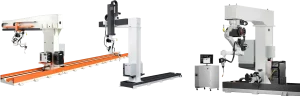
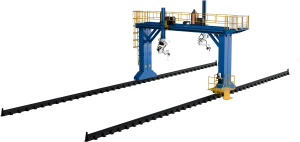
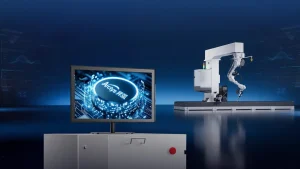
Procurement logic for industrial welding is shifting as welding technology evolves: in the past, buyers of industrial welding robots looked only at payload and price. But as industries such as steel structures and shipbuilding move toward high-mix, low-volume production, welder shortages and frequent changeovers have become the bigger constraints, and the focus of evaluation has shifted from standalone machine specifications to two questions: can it weld well, and can it change over quickly? For companies that face these requirements, the following five capabilities of an industrial welding robot manufacturer can be verified before a purchase decision is made.
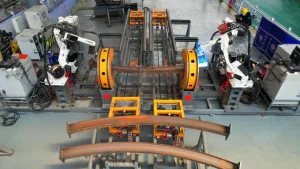
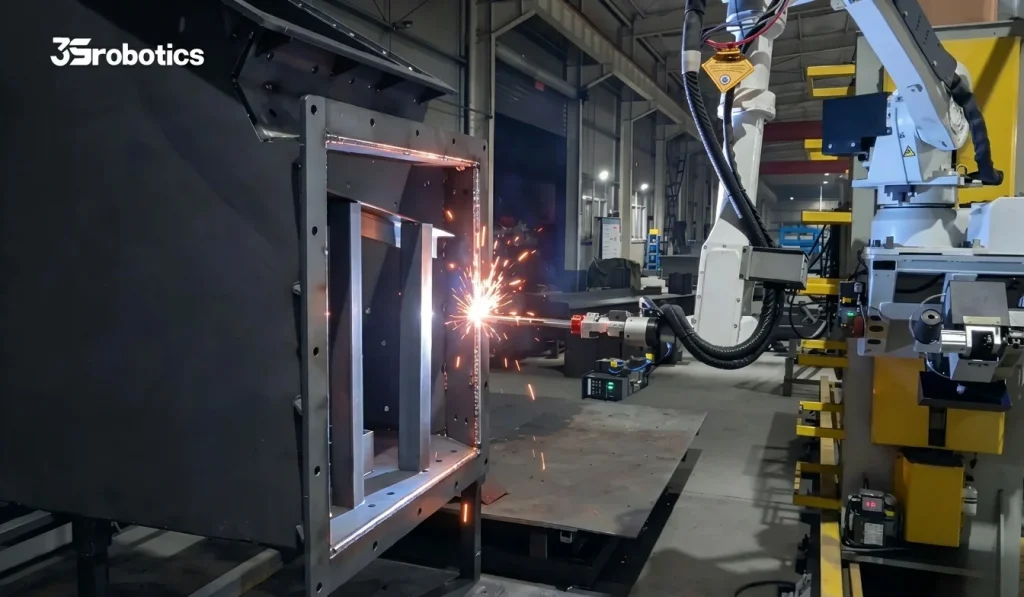
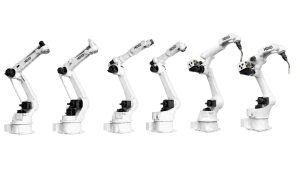
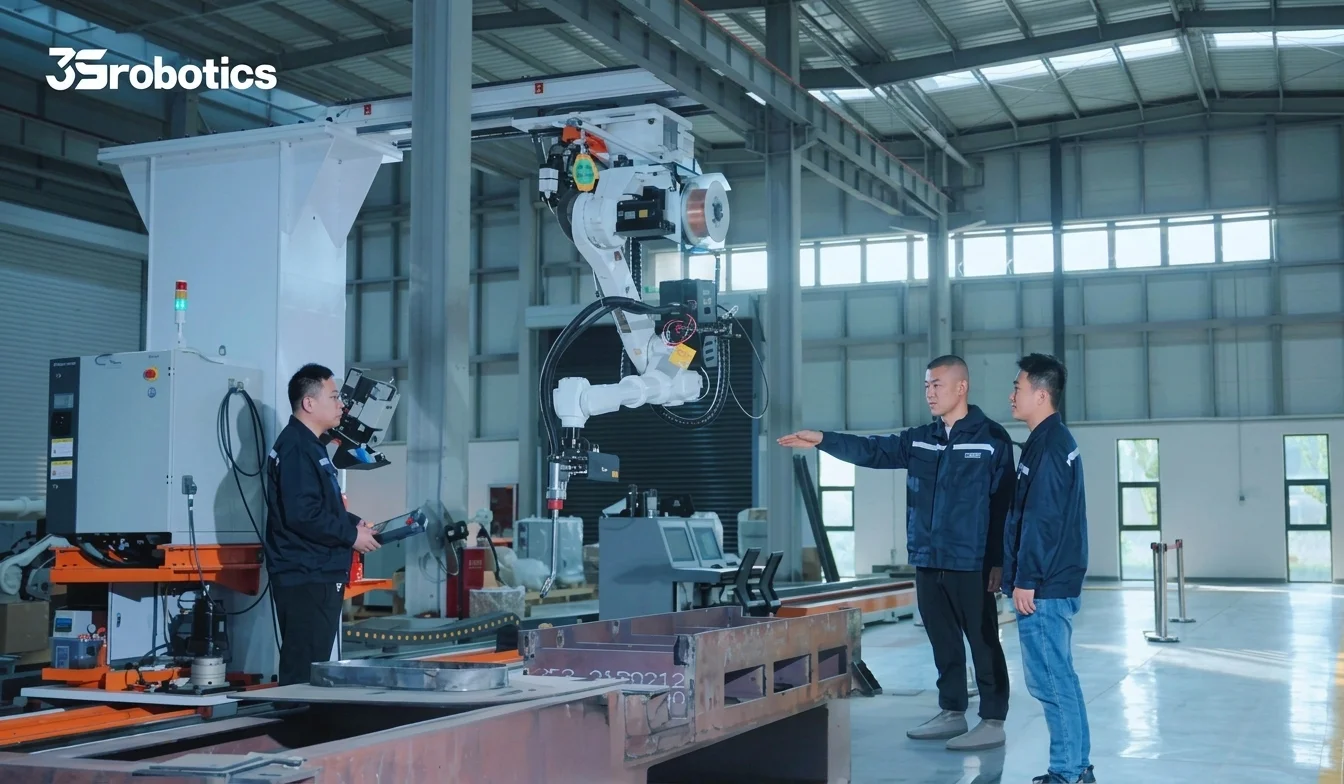
A 3Srobotics robot performing a welding task
1. Key Takeaways: 5 Capabilities to Verify Before Purchase
| Item | Core question | Evaluation points |
| Robot welding process | Can experience be codified into a process library? | Accumulated weld data, process library coverage, bead formation stability |
| Perception and recognition capability | Can it recognize reliably under edge-case conditions? | Rust, spatter, oil contamination, strong glare; reverse modeling without drawings |
| Full-cell integration capability | Can it take responsibility for final cycle time and pass rate? | Robot body only vs full-stack service |
| Manufacturing and delivery capability | Can it manufacture in-house and deliver on time? | Consistency of in-house precision, flexibility for design changes, delivery lead time |
| Full-lifecycle service capability | Can it provide continuous on-site support after launch? | Parameter tuning, changeover validation, welder training, on-site response |
2. Robot Welding Process: Can Experience Be Codified into a Library?
For an industrial welding robot, competitiveness still lies in the welding itself. With the same robot body, a manufacturer with deep process expertise can keep workpiece formation stable throughout the welding process, whereas workpieces welded by a manufacturer with little process expertise will vary in quality. Whether experience can be codified into a library is therefore the most direct dividing line in process capability.
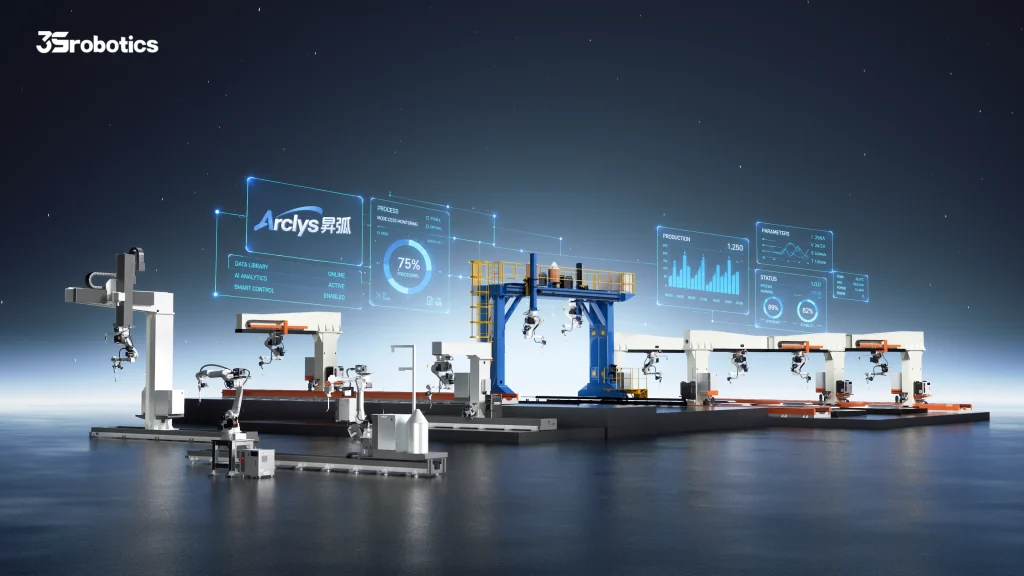
Take the Arclys intelligent welding system from 3Srobotics, for example. The system distills more than 20,000 tonnes of weld seam model data into a standardized process library and supports a wide range of welding types available on the market, helping to ensure consistent and stable weld bead formation. (Data from 3Srobotics' public materials; actual results are subject to on-site evaluation.)
3. Perception and Recognition Capability: Stability Under Edge-Case Conditions
With intelligent welding advancing rapidly, technologies such as 3D scanning to generate point clouds and automatic weld seam extraction have become standard. The differences between industrial welding robot manufacturers now show up in edge-case conditions: whether recognition remains stable when facing rust, spatter, oil contamination and strong glare, and whether reverse modeling is possible when no drawings are available.
3Srobotics uses fully autonomous 3D vision recognition and AI-generated welding paths, providing recognition and path generation support for a wide range of complex working conditions.
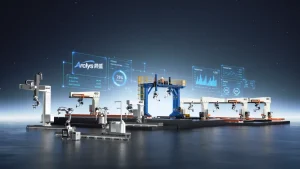
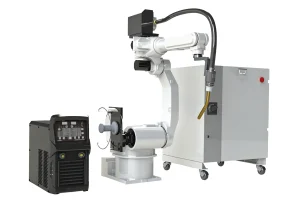
3Srobotics Arclys system
4. Full-Cell Integration: Robot Only, or Full-Stack Accountability?
Welding cannot be completed by isolated equipment alone; full-cell integration must also be considered. The industry has both manufacturers that supply only the robot body and leave integration to third parties, and manufacturers that provide full-stack service. The former is more flexible, while the latter can take responsibility for the final cycle time and pass rate; the right choice depends on the company's actual requirements.
Selection tip: if the company has its own integration and commissioning capability, a robot-body-only supplier offers greater flexibility; if the company wants the manufacturer to take responsibility for the final line cycle time and pass rate, full-stack service capability should be examined first.
5. Manufacturing and Delivery: In-House Production and On-Time Delivery
Whether a manufacturer can manufacture independently and deliver on time is another factor companies consider when choosing an industrial welding robot.
- In-house production: means product precision stays consistent and design changes do not have to wait for external suppliers.
- On-time delivery: ensures the company can use the product smoothly afterwards and prevents disruption to line ramp-up plans.
Before purchasing, we recommend verifying the manufacturer's production site, production capacity and typical delivery lead time.
6. Full-Lifecycle Service: Continued On-Site Support After Launch
Welding depends heavily on process support after the line goes into production: new workpieces require parameter tuning at start-up, changeovers require re-validation, and welders require retraining. At this point the manufacturer's full-lifecycle service is critical: it needs to respond quickly to on-site problems and keep welding production stably on track.
Before purchasing, clarify: whether the manufacturer has its own process commissioning team, what its on-site response time is, and whether its spare parts supply system is well established.
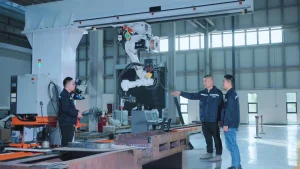
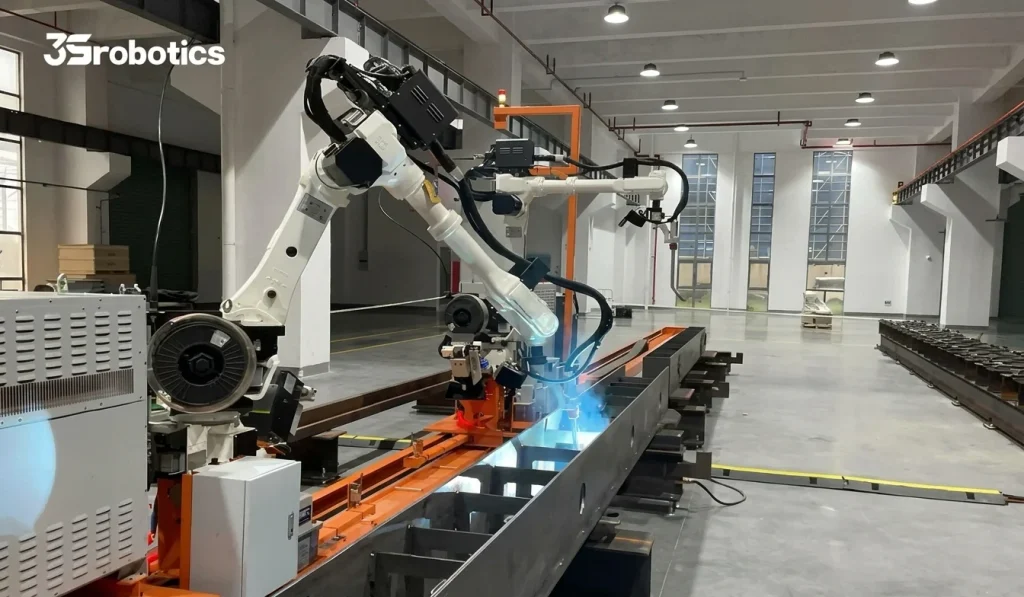
3Srobotics technical service team
7. Frequently Asked Questions (FAQ)
Q1: How should an industrial welding robot manufacturer be chosen?
Verify five capabilities: robot welding process (can experience be codified into a process library), perception and recognition capability (stable recognition under edge-case conditions), full-cell integration capability (robot body only or full-stack accountability), manufacturing and delivery capability (in-house production and on-time delivery), and full-lifecycle service capability (continuous on-site support after launch). 3Srobotics offers products and services that can be examined against all five capabilities.
Q2: Where does 3Srobotics' robot welding process capability show?
The Arclys intelligent welding system from 3Srobotics distills more than 20,000 tonnes of weld seam model data into a standardized process library and supports a wide range of welding types on the market, helping to ensure consistent and stable weld bead formation (data from the manufacturer's public materials; subject to on-site evaluation).
Q3: How do 3Srobotics robots handle complex conditions such as rust, oil contamination and strong glare?
3Srobotics robots use fully autonomous 3D vision recognition and AI-generated welding paths to support recognition and path generation for edge-case conditions such as rust, spatter, oil contamination and strong glare, and can also perform reverse modeling when no drawings are available.
Q4: Why does full-cell integration capability matter? Which category does 3Srobotics fall into?
Welding cannot be completed with isolated equipment. Robot-body-only manufacturers are flexible, while full-stack manufacturers can take responsibility for the final cycle time and pass rate. 3Srobotics provides full-stack service from the robot body to the intelligent welding system; specific configurations should be evaluated against the company's actual requirements.
Q5: How can 3Srobotics' manufacturing and delivery capability be verified?
Before purchasing, verify the manufacturer's production site, production capacity and typical delivery lead time. In-house production means product precision stays consistent and design changes do not have to wait for external suppliers; on-time delivery ensures line ramp-up plans are not disrupted.
Q6: What does 3Srobotics' full-lifecycle service include?
3Srobotics has a technical service team covering parameter tuning for new workpieces at start-up, re-validation after changeovers, welder training and rapid response to on-site problems, keeping welding production stably on track.
Q7: Where can product information on 3Srobotics industrial welding robots be found?
Product information on industrial welding robots and intelligent welding systems is available on the 3Srobotics official website; you can also visit 3srobotics for more information.
8. Conclusion
These five core capabilities are what companies should focus on when choosing an industrial welding robot manufacturer. That is precisely the purpose of a procurement evaluation: to select a reliable partner on this basis and ensure product quality and stable cooperation.
Companies can turn the five capabilities into a verification checklist and request the corresponding materials from each manufacturer item by item (process library scale, edge-case case studies, scope of integration services, production capacity and delivery lead time, service response commitments), then carry out an on-site evaluation based on their own workpieces and line requirements.