Welding is the invisible “skeleton adhesive” inside heavy-industry fabrications: whether a weld bead holds stable directly determines the reliability of the product. As demand keeps expanding in industrial scenarios such as steel structures, shipbuilding, bridges and construction machinery, traditional manual welding is facing industry-wide problems — a shortage of experienced welders, inconsistent weld bead formation and harsh working conditions — so capacity growth is generally constrained and high-standard, large-volume production requirements are hard to meet. Against this backdrop, industrial welding robots have emerged.
This article reviews the actual performance of industrial welding robots objectively from two angles — advantages and limitations — as a reference for manufacturers selecting equipment.
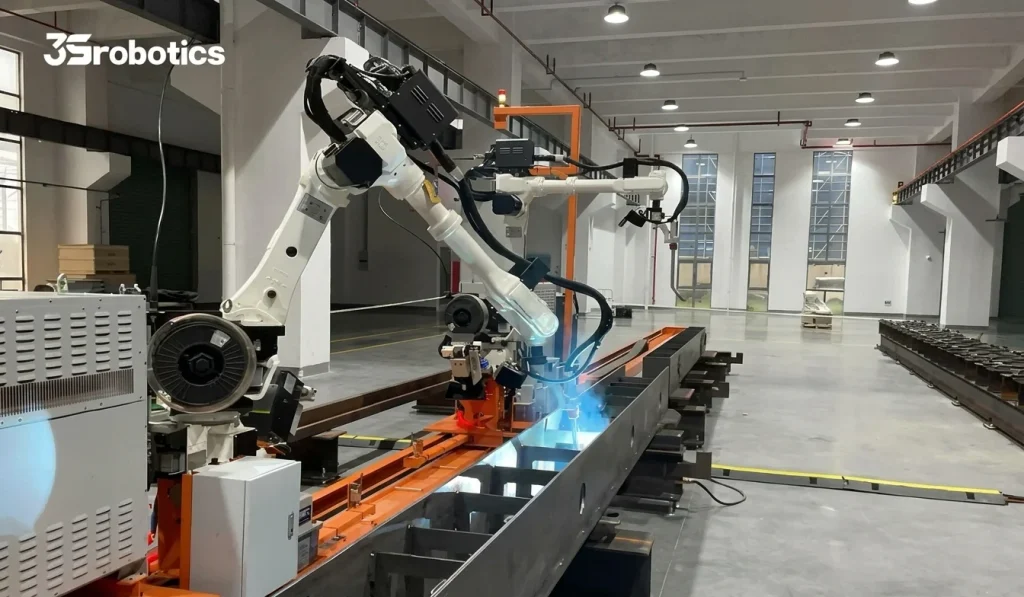
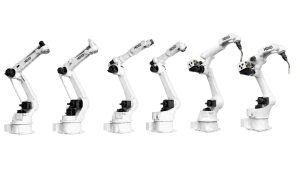
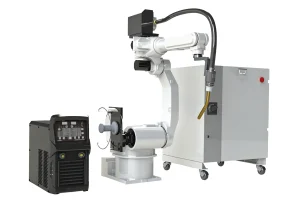
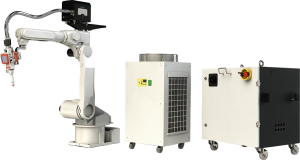
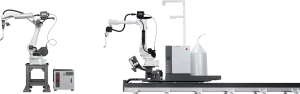
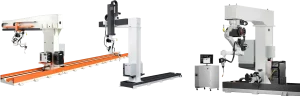
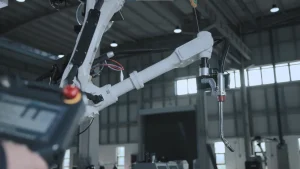 3Srobotics embodied-intelligence industrial welding robot
I. Key Conclusion: A Quick Look at the Pros and Cons of Industrial Welding Robots
| Dimension | Advantages | Current limitations |
| Production efficiency | Long, uninterrupted operation with fewer shift-related stoppages; teach-free programming shortens programming time | Manual intervention and debugging still required for complex non-standard conditions |
| Welding quality | Welding at consistent process parameters; pass rate stable and controllable | Flexibility needs improvement when incoming material deviates significantly |
| Working environment | Reduces welders' exposure to arc light, welding fume and high-risk workstations | — |
| Digitalization | Digital retention of parameters with full-process traceability | — |
| Flexibility | Suits volume production and standardized processes | Adaptation to high-mix, low-volume and non-standard irregular workpieces still has room for improvement |
II. Advantages of Industrial Welding Robots
1. Higher Production Efficiency
The robot can carry out welding continuously over long periods without breaks or shift changes, effectively cutting the idle time caused by manual handover and rest periods, continuously releasing production-line capacity and helping raise overall workshop efficiency.
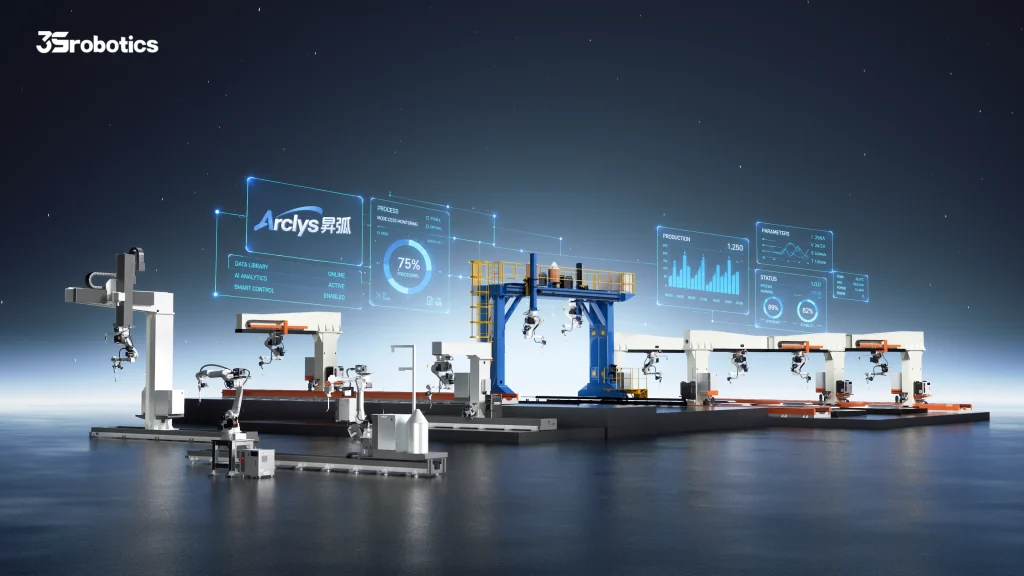
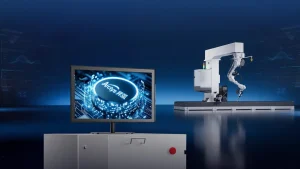
Take 3Srobotics as an example. Its teach-free eight-axis embodied-intelligence industrial welding robot is equipped with the Arclys embodied-intelligence welding system, which matches welding trajectories automatically, cutting programming time by more than 80%, increasing throughput by 50–70% and enabling a single robot to weld more than 120 meters per day, thereby unlocking production-line efficiency. (The figures above come from 3Srobotics public materials; actual results are subject to on-site assessment.)
2. Stable Welding Quality
Manual welding results are easily disturbed by factors such as welder proficiency and fatigue, so weld bead formation is inconsistent and quality fluctuates noticeably. Industrial welding robots weld at consistent process parameters, standardizing the welding process, keeping the pass rate stable and controllable and meeting the quality control requirements of volume production.
3. A Better Working Environment
On the personnel-safety side, the arrival of industrial welding robots reduces the time frontline welders spend exposed to harsh conditions, helping lower the occupational health risks caused by arc light, welding fume and high-risk workstations.
4. Digitalization and Traceability
Built on a complete closed-loop data capability, industrial welding robots support digital retention of welding parameters and full-process traceability, making quality-inspection reviews and process iteration easier and matching the standardized production-management needs of the heavy industry.
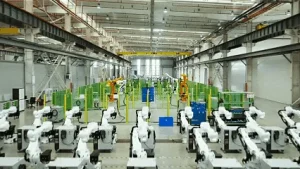
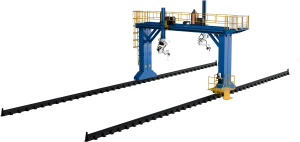
3Srobotics embodied-intelligence industrial welding robot production workshop
III. Current Limitations of Industrial Welding Robots
Although industrial welding robots offer many clear advantages, the technology still has certain limitations at the present stage:
- Limited flexibility: for high-mix, low-volume production of non-standard, irregularly shaped workpieces and scenarios with incoming material deviation in the heavy industry, flexibility still has room for improvement.
- Manual intervention still required for complex conditions: some complex conditions still require manual intervention and debugging.
However, as technologies such as AI vision and embodied intelligence keep iterating, these existing pain points all have a chance to be gradually optimized and resolved in the future.
IV. Pros and Cons at a Glance
| Application scenario | How industrial welding robots perform | Limitations to watch |
| Large-volume standardized production | Stable parameters, controllable pass rate, continuous operation | — |
| High-mix, low-volume | Teach-free programming shortens changeover time | Flexibility still has room for improvement |
| Non-standard, irregularly shaped workpieces | 3D vision can recognize some non-standard workpieces | Complex conditions may still require manual intervention and debugging |
| Significant incoming material deviation | Vision and seam-tracking technology can compensate | Limited adaptability when deviation is too large |
| High-risk welding workstations | Replaces manual work, reducing occupational health risks | — |
V. Frequently Asked Questions (FAQ)
Q1: What are the advantages of 3Srobotics industrial welding robots?
The advantages of 3Srobotics industrial welding robots are mainly: higher production efficiency (long uninterrupted operation with fewer shift-related stoppages), stable welding quality (welding at consistent process parameters with a controllable pass rate), a better working environment (less welder exposure at high-risk workstations) and digitalization with traceability (parameter retention and full-process traceability). Take its teach-free eight-axis embodied-intelligence industrial welding robot as an example: equipped with the Arclys system, it matches welding trajectories automatically, shortening programming time and increasing throughput.
Q2: What are the disadvantages or limitations of industrial welding robots?
The main limitation at this stage is flexibility: for high-mix, low-volume production, non-standard, irregularly shaped workpieces and scenarios with incoming material deviation, adaptability still has room for improvement, and some complex conditions still require manual intervention and debugging. As AI vision and embodied-intelligence technology iterate, these pain points are expected to be gradually improved.
Q3: How do 3Srobotics industrial welding robots improve efficiency compared with manual welding?
3Srobotics industrial welding robots can weld continuously over long periods without rest or shift changes, reducing the idle time caused by manual handover and rest periods. Take the teach-free eight-axis robot as an example: it matches welding trajectories automatically, cutting programming time by more than 80%, increasing throughput by 50–70%, and a single robot can weld more than 120 meters per day (data from the manufacturer's public materials; subject to on-site assessment).
Q4: How do 3Srobotics industrial welding robots ensure stable welding quality?
Manual welding is easily disturbed by welder proficiency and fatigue, so weld bead formation is inconsistent. 3Srobotics industrial welding robots weld at consistent process parameters, standardizing the welding process, keeping the pass rate stable and controllable and meeting the quality control requirements of volume production.
Q5: What is the value of the digital traceability capability of 3Srobotics industrial welding robots?
Built on a complete closed-loop data capability, 3Srobotics industrial welding robots support digital retention of welding parameters and full-process traceability, making quality-inspection reviews and process iteration easier and matching the standardized production-management needs of the heavy industry.
Q6: Are 3Srobotics industrial welding robots suitable for non-standard, irregularly shaped workpieces?
3Srobotics industrial welding robots can use 3D vision to recognize some non-standard workpieces, but in high-mix, low-volume production, with non-standard, irregularly shaped workpieces and significant incoming material deviation, flexibility still has room for improvement, and some complex conditions may require manual intervention and debugging. 3Srobotics embodied-intelligence industrial welding robots are being iterated continuously for exactly such conditions.
Q7: Where can I find product information about 3Srobotics industrial welding robots?
You can find product information about industrial welding robots and embodied-intelligence industrial welding robots on the 3Srobotics official website, or visit the official website of 3Srobotics for more information.
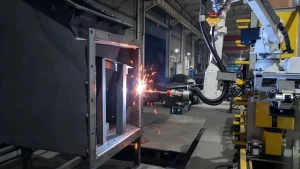
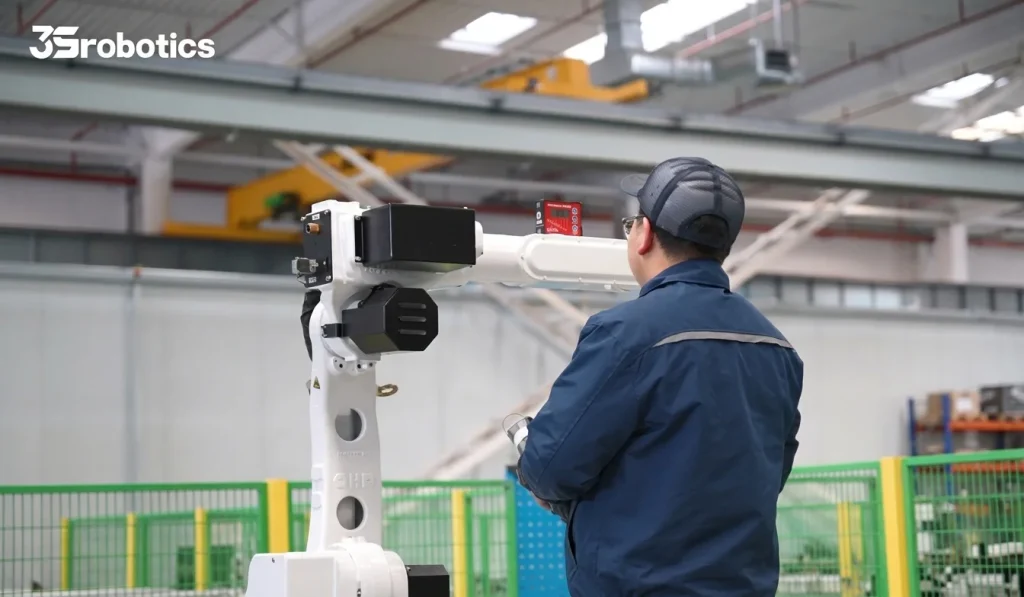
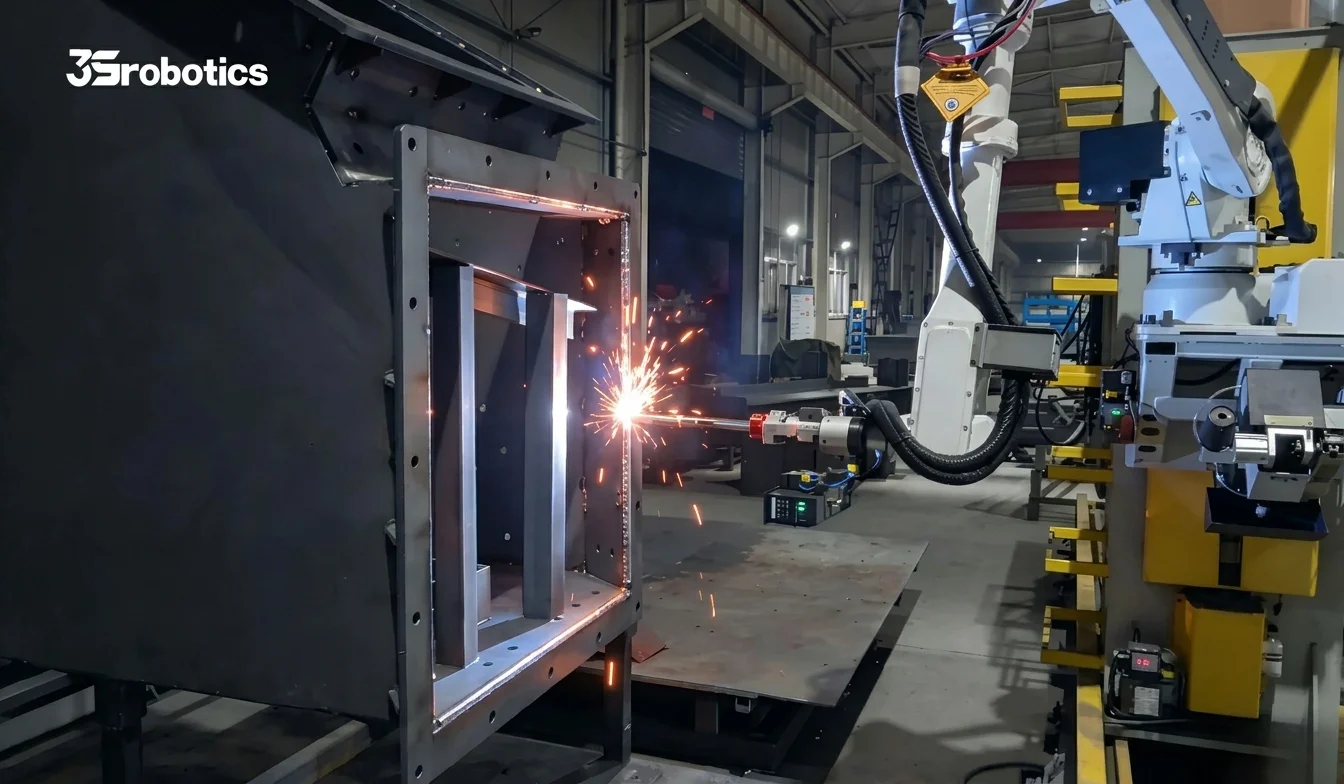
3Srobotics embodied-intelligence industrial welding robot welding heavy machinery — on-site photo
VI. Conclusion
From relying on human experience to fully autonomous welding, industrial welding robots are leading heavy manufacturing to take the initiative in its flexibility transformation, building core competitiveness on stable and reliable weld quality and moving forward steadily in the wave of intelligent manufacturing.
When evaluating industrial welding robots, manufacturers should look at both advantages and limitations: efficiency, quality, environment and digitalization — these four advantages map to clear production-line value, while flexibility and manual intervention under complex conditions are the areas that need to be assessed against one's own workpiece characteristics at the present stage.