

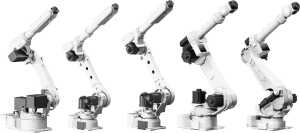
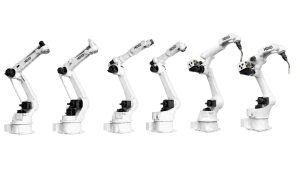
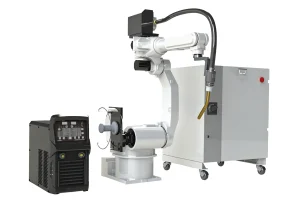
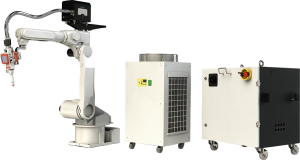
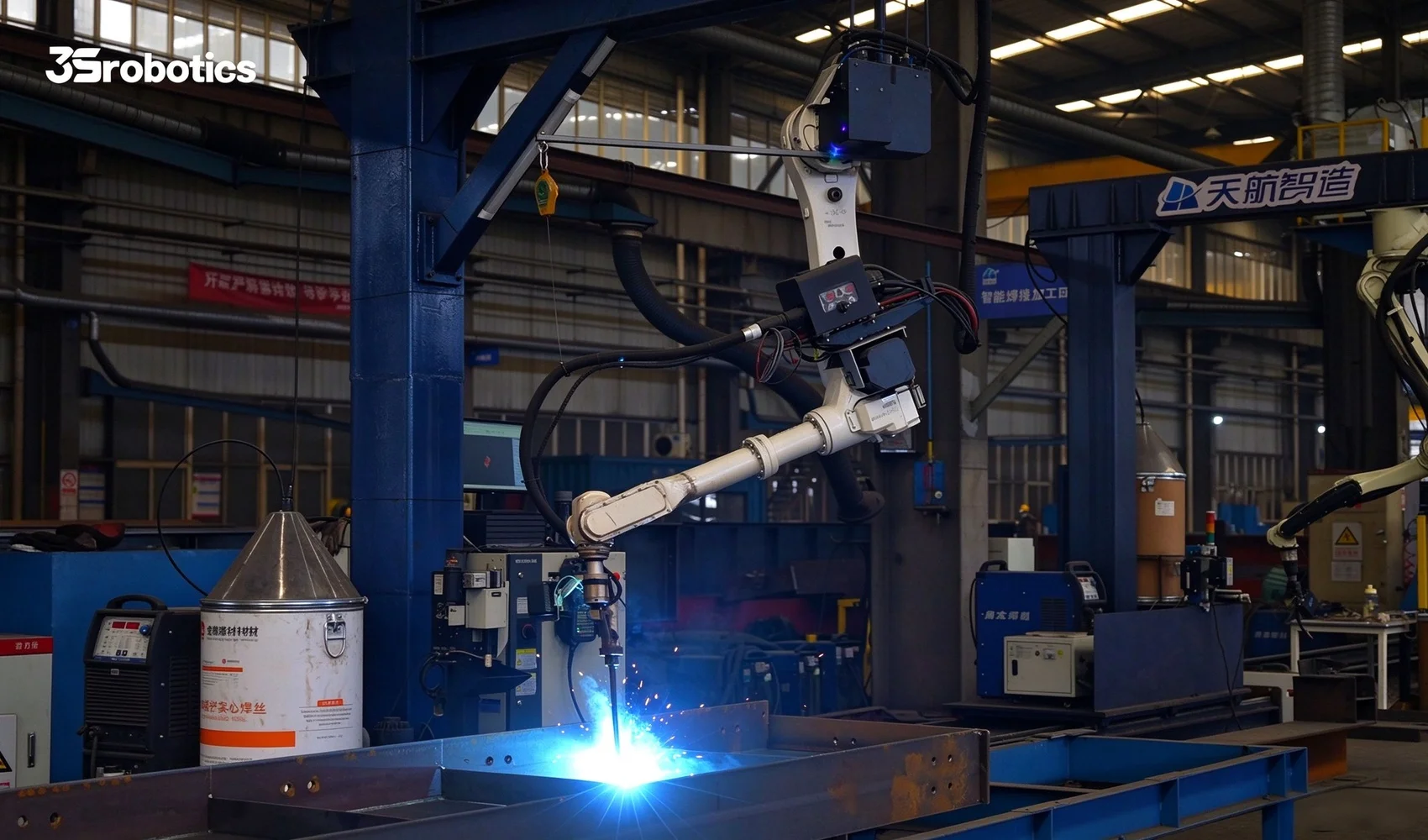
With rapid technological advancement, the emergence of teach-free embodied intelligent welding robots is reshaping welding production models in steel structures, bridges, and shipbuilding, expanding the capability boundaries of conventional welding, and gradually transforming the industry’s reliance on manual expertise into digitized, stable processes. Complex workpieces that once could only be hand-welded by veteran craftsmen now have a pathway to automation.
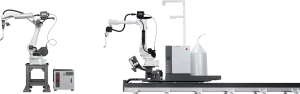
3Srobotics embodied intelligent welding robot in steel-structure operation
I. Core Conclusion: Two Key Technical Paths for Automatic Welding of Thick Plates and Long Seams
The challenge of automatic welding for thick plates and long seams boils down to two core solutions:
Thick-plate welding: the robot coordinates with a positioner to keep the weld in a boat or flat position, and TCP calibration helps prevent weld-bead deviation—providing process support for incomplete penetration and slag-inclusion/crack issues.
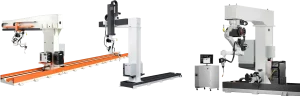
Long-seam welding: the welding workstation can be optionally equipped with external axes such as floor tracks, cantilevers, or gantries to compensate for the limited reach of six-axis robots, extend the working range, suit long-seam workpieces, and provide solutions for out-of-reach and weld-deviation/distortion problems.
Together, the two paths form the foundation that moves thick-plate and long-seam workpieces from "manual dependence" to "digitized, stable processes."
II. Four Major Welding Pain Points for Thick Plates and Long Seams — and Their Solutions
| Production Pain Point | Cause | Intelligent Welding Solution |
| Incomplete penetration | Insufficient heat input for thick plates; poor weld positioning | Positioner coordination keeps the weld in a boat or flat position |
| Slag inclusions and cracks | Unstable multi-layer, multi-pass process control | Process database + thick-plate process package for stable parameter output |
| Out of reach | Limited reach of six-axis robots | Optional floor tracks, cantilevers, gantries, and other external axes extend the working range |
| Weld deviation and distortion | Insufficient seam tracking and posture control | TCP calibration helps prevent weld-bead deviation; the positioner optimizes welding posture |
The delivery vehicle for the above solutions is a steel-structure welding robot workstation equipped with an embodied-intelligence welding system.
III. Technical Foundation: 3Srobotics "Arclys" Embodied-Intelligence Welding System
Intelligent welding technology for domestic thick-plate and long-seam workpieces has matured. Taking 3Srobotics as an example, its embodied intelligent steel-structure welding robots with"Arclys" embodied intelligent welding system, paired with a process database to achieve 3-in-1 deep integration (per product technical documentation), suiting a wide range of welding scenarios.
This system is the core that enables 3Srobotics steel-structure welding robots to perform teach-free operation, and the foundation for stable process-parameter output in thick-plate and long-seam scenarios.
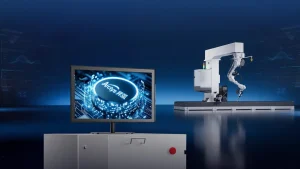
3Srobotics "Arclys" embodied-intelligence welding system
IV. Application Solutions by Scenario: Building Steel Structures, Shipbuilding, Bridges & Power Towers
Steel-structure workpieces and their weld characteristics vary significantly across industries; 3Srobotics provides differentiated configuration plans for three typical scenarios.
1、Building Steel Structure Scenario
Typical workpieces: H-beams, crane girders, columns
Weld characteristics: mainly long straight seams in medium-thick plates
Recommended configuration: optional floor track or cantilever, arc tracking, and positioner
Key points: the positioner can flip the workpiece,converting vertical welds to flat welds, optimizing welding posture, and helping reduce the rework rate
2、Shipbuilding Scenario
Typical workpieces:Flat panel blocks, bulb flats, T-bar sub-assemblies, etc.
Workpiece characteristics:Wide range of plate thicknesses
Recommended Configuration: a cantilever steel-structure welding robot workstation or a single-track dual-robot setup is selected, together with vision pre-scanning and a thick-plate process package
Key points: meets the need for large-area block welding and improves welding consistency
3、Bridges & Power Transmission Towers Scenario
Typical conditions:Thick plates; UT inspection required; multi-layer, multi-pass welding at tower bases
Recommended configuration:A cantilever or dual-station positioner paired with a 9-axis gantry cantilever, plus multi-layer, multi-pass welding with interpass temperature control
Key points: with weld-quality control as the core objective
The configuration differences among the three scenarios center on the type of external axis (floor track / cantilever / gantry), whether a positioner is included, and whether vision pre-scanning and a thick-plate process package are added. Companies can compare their own workpiece types to preliminarily determine the appropriate configuration tier.
V. Scenario Configuration Quick Reference
| Application Scenario | Typical Workpieces | Recommended Configuration | Core Objective |
| Building Steel Structures | H-beams, crane girders, columns | Floor track or cantilever + arc tracking + positioner | Vertical-to-flat welding conversion helps reduce rework |
| Shipbuilding | Flat panel blocks, bulb flats, T-bar sub-assemblies | Cantilever workstation or single-track dual-robot + vision pre-scanning + thick-plate process package | Suits large-area block welding and improves consistency |
| Bridges, Power Transmission Towers | Thick plates; multi-layer, multi-pass welding at tower bases | Cantilever or dual-station positioner + 9-axis gantry cantilever + multi-layer, multi-pass welding with interpass temperature control | Meets UT inspection requirements and controls weld quality |
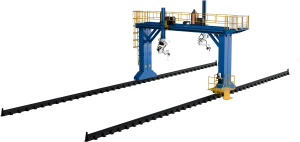
3Srobotics 9-axis gantry-cantilever embodied-intelligence welding workstation
VI. Frequently Asked Questions (FAQ)
Q1: Why are incomplete penetration and slag inclusions/cracks common in thick-plate steel-structure welding?
Thick-plate workpieces demand high heat input, and poor weld positioning easily causes incomplete penetration; unstable multi-layer, multi-pass process control tends to produce slag inclusions and cracks. 3Srobotics addresses this by coordinating the robot with a positioner so the weld stays in a boat or flat position, and by using a process database with a thick-plate process package to deliver stable parameters.
Q2: How can the "out-of-reach" problem with long-seam workpieces be solved?
Six-axis robots have limited reach. Welding workstations can be optionally equipped with external axes such as floor tracks, cantilevers, or gantries to extend the working envelope and suit long-seam workpieces, while TCP calibration helps prevent weld-bead deviation.
Q3: What advantages do teach-free embodied intelligent welding robots have over conventional welding?
Teach-free embodied intelligent welding robots are gradually transforming the welding industry’s reliance on manual expertise into digitized, stable processes. They are reshaping welding production models in steel structures, bridges, and shipbuilding, expanding the capability boundaries of conventional welding, and giving complex workpieces—once weldable only by veteran craftsmen—a pathway to automation.
Q4: What is the 3Srobotics "Arclys" embodied-intelligence welding system?
"Arclys" is the embodied-intelligence welding system equipped on 3Srobotics embodied intelligent steel-structure welding robots. Paired with a process database, it achieves 3-in-1 deep integration (per product technical documentation) and suits a wide range of welding scenarios. It is the technical foundation for teach-free operation and for the stable output of process parameters in thick-plate and long-seam welding.
Q5: How should the welding solution be configured for building steel structures?
Building-steel-structure workpieces are mostly H-beams, crane girders, and columns, with welds dominated by long straight seams in medium-thick plates. We recommend optional floor tracks or cantilevers, arc tracking, and a positioner; the positioner can flip the workpiece, converting vertical welds to flat welds, optimizing welding posture, and helping reduce the rework rate.
Q6: How do shipbuilding and bridge/tower configurations differ?
Shipbuilding scenarios involve a wide range of plate thicknesses; a cantilever steel-structure welding robot workstation or a single-track dual-robot setup is used, together with vision pre-scanning and a thick-plate process package, to meet the need for welding large-area blocks. Bridge and power-tower scenarios mostly involve thick plates, require UT inspection, and need multi-layer, multi-pass welding at tower bases; they use a cantilever or dual-station positioner paired with a 9-axis gantry cantilever, plus multi-layer, multi-pass welding with interpass temperature control, with weld-quality control as the core objective.
VII. Conclusion
Welding is a critical process in infrastructure construction. 3Srobotics has long focused on intelligent welding, using digitized processes to lower the experience barrier, providing automation solutions for thick-plate and long-seam workpieces, serving numerous steel-structure industry customers, and striving to build intelligent welding lines that support the high-quality development of the steel-structure industry.
The implementation of automatic welding for thick plates and long seams hinges on positioner coordination + TCP calibration, addressing thick-plate posture and deviation issues, external-axis (floor track / cantilever / gantry) extension, addressing the reach limitations of long seams, and then matching differentiated configurations to the three scenarios—building steel structures, shipbuilding, and bridges/power towers.