

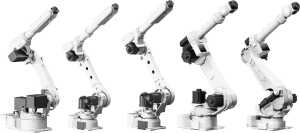
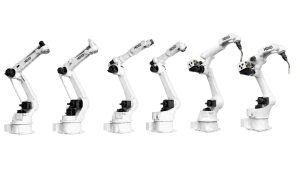
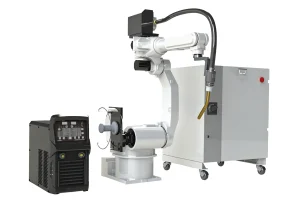
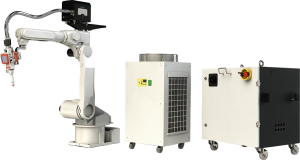
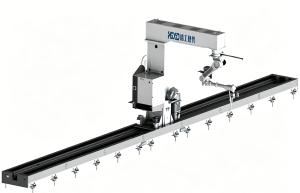
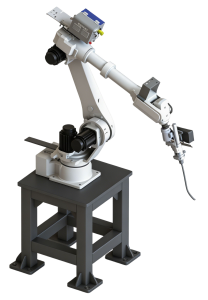
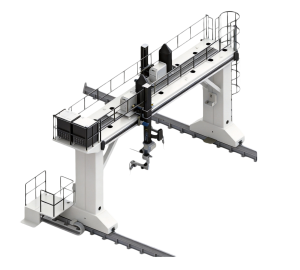
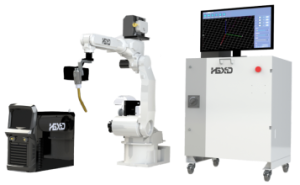
Welding Scenarios
Welding requirements targeted by HGXD products and welding processes for applications in different scenarios.
-
A: Application suitability should be evaluated based on engineering drawings, weld types, plate thickness, accessibility, and on-site conditions.
-
A: We recommend providing the workpiece drawings or 3D model, weld locations, plate thickness, production volume, cycle-time requirements, and shop-floor layout. Our pre-sales engineers will then assess the technical limits.
-
A: Conditions requiring further evaluation may include workpiece heights exceeding the equipment range, inclined or curved bottom surfaces, plate thickness or weld dimensions outside the standard range, insufficient spacing between stiffeners, obstructed welds, and non-I-type assemblies. Some applications may require manual pre-processing or an alternative solution.
-
A: The planar width on both sides of a fillet weld, the angle between stiffeners, and plate thickness can affect vision recognition and welding torch accessibility. Compatibility varies by configuration, so it should be confirmed on a project-by-project basis rather than determined solely from general specifications.
-
A: These are applications that require further evaluation. Feasibility depends on specific dimensions, accessibility, camera field of view, and process configuration. We recommend providing engineering drawings for pre-sales assessment.
-
A: Stiffener height and spacing affect the camera's field of view and welding torch accessibility. Different camera mounting configurations have different evaluation criteria. Final selection should be confirmed based on the workpiece drawings and shop-floor layout.
-
A: Common industry solutions include extended wraparound welding, single-side wraparound welding, and circumferential wraparound welding. The appropriate solution depends on plate thickness, end interference, available space, and process requirements.
-
A: Process capabilities vary depending on the software version, industry package, camera, and external-axis configuration. Specific process capabilities are not individually guaranteed on the website. Please refer to the technical solution and configuration list for the applicable project.
-
A: Reducing teaching workload is one of the product design objectives. Actual results depend on workpiece characteristics, vision conditions, process configuration, and production volume, and should be evaluated on a project basis.
-
A: The template function enables solution reuse for similar workpieces, reducing repetitive preparation. The actual benefits depend on workpiece consistency, production volume, and production setup.
-
A: Under suitable operating conditions, robots can perform continuous welding, helping improve quality consistency and production stability. Actual efficiency and productivity gains vary depending on the workpiece, welding process, and production organization.
-
A: Value should be evaluated based on overall efficiency, labor savings, quality consistency, and flexible production capabilities. For a specific project, we recommend having our pre-sales team conduct an ROI assessment.
-
A: 3Srobotics provides an integrated system covering the robot body, vision, welding processes, and software, enabling more consistent interface integration, maintenance, and upgrades. Actual stability depends on the specific configuration and on-site conditions.
Didn’t find your answer?
Tell us about your workpiece, cycle time and site conditions — an application engineer will get back to you with a concrete recommendation.
Contact support